
Related Posts



The Translation Layer
The CFO opens the dashboard every Monday morning. Cash flow is within range. The cost of sales is creeping up. Forecast accuracy keeps missing by the same margin. The model says the number is achievable – but the same gap keeps appearing quarter after quarter.
The CMO opens a different dashboard. Engagement is up. Content is performing. Campaigns are running. The funnel is moving.
Both dashboards are telling the truth.
Neither one is telling the whole story.
And somewhere between those two screens, the revenue the company needs is getting lost.
Two Dashboards. Two Different Stories.
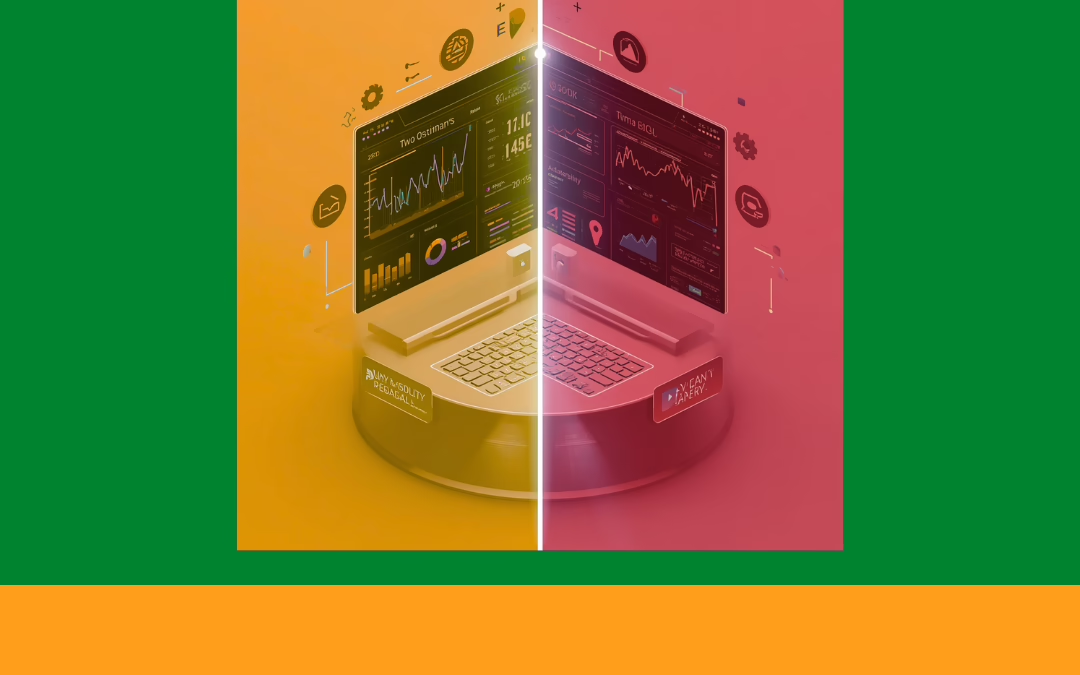
The CFO’s dashboard is a rearview mirror – cash flow, margin, cost of sales, and forecast accuracy. The CMO’s dashboard is a windshield – campaigns running, content performing, funnel moving. Neither tells you whether the two are still measuring the same strategy.
And here’s what gets missed: the CFO’s job isn’t cost control. It’s growth. The board knows it. The CEO knows it. The CFO knows it too. But growth requires a model, a hypothesis about which markets, which segments, which motions will produce the return the company needs.
When the go-to-market story hasn’t been translated into a language the CFO can model, cost-cutting becomes the default. Not because the CFO doesn’t want to invest in growth. Because they have no defensible basis for doing so. The translation layer converts the growth imperative into a number that the CFO can bring to the board.
The CMO’s dashboard keeps reporting activity against the old story. Engagement is up, but with the wrong audience. Content is performing. However, it’s the content that worked before the strategy changed. The funnel is moving, except it’s towards deals that fit last year’s model, not this year’s.
Sound Familiar?
Imagine you’re a fractional CFO working with a $12M B2B services company. You’ve just come out of your annual planning session. You’ve modeled a 22% revenue growth target, anchored in expanding two enterprise segments and reducing dependency on a handful of large accounts that have historically compressed margins.
The CMO walks out of that same meeting and opens the campaign calendar. It’s built around the same messaging that drove the last three years of growth, the messaging that won those large accounts. The content is performing. The engagement numbers are solid. The ICP hasn’t been updated since the last brand refresh.
However, when you open the dashboard the following week, forecast accuracy is off by the same margin it was last quarter. The growth target requires a different buyer than the one marketing is currently reaching.
Nobody had a conversation about the gap between those two realities. Not because they weren’t in the same room. Because no one owned the translation.
The Translation Layer is Missing
Neither dashboard is broken. The translation layer between them is missing. The model starts missing not because the math is wrong, but because the story behind the math is no longer true.
What it Looks Like When the Translation Layer Exists
When the CFO and CMO are operating from the same story, the budget conversation changes. The CFO can model growth with confidence instead of defaulting to cost-cutting. The CMO is running campaigns against the buyer the revenue plan needs, not the buyer who showed up three years ago. Forecast misses stop being a mystery because both functions are reading from the same source.
The QBR stops being a defense of spending and becomes a conversation about investment. The gap between what the model predicts and what the market produces gets smaller, not because someone worked harder, but because both dashboards are finally measuring the same direction.
That world is accessible. But it requires a conversation most companies haven’t had yet.
The Question Worth Asking This Week
Before the next QBR, sit the CFO’s dashboard and the CMO’s dashboard next to each other and ask:
Are these two screens measuring the same go-to-market story – or two different versions of it?
If the answer is two different versions, you’ve found the translation gap. That’s where the work starts. Not in the pipeline. Not in the campaign calendar.
In the conversation between the two dashboards that nobody has had yet.
If your CFO and CMO are reading two different dashboards, the conversation that closes the gap starts here. Book a Discovery Session.